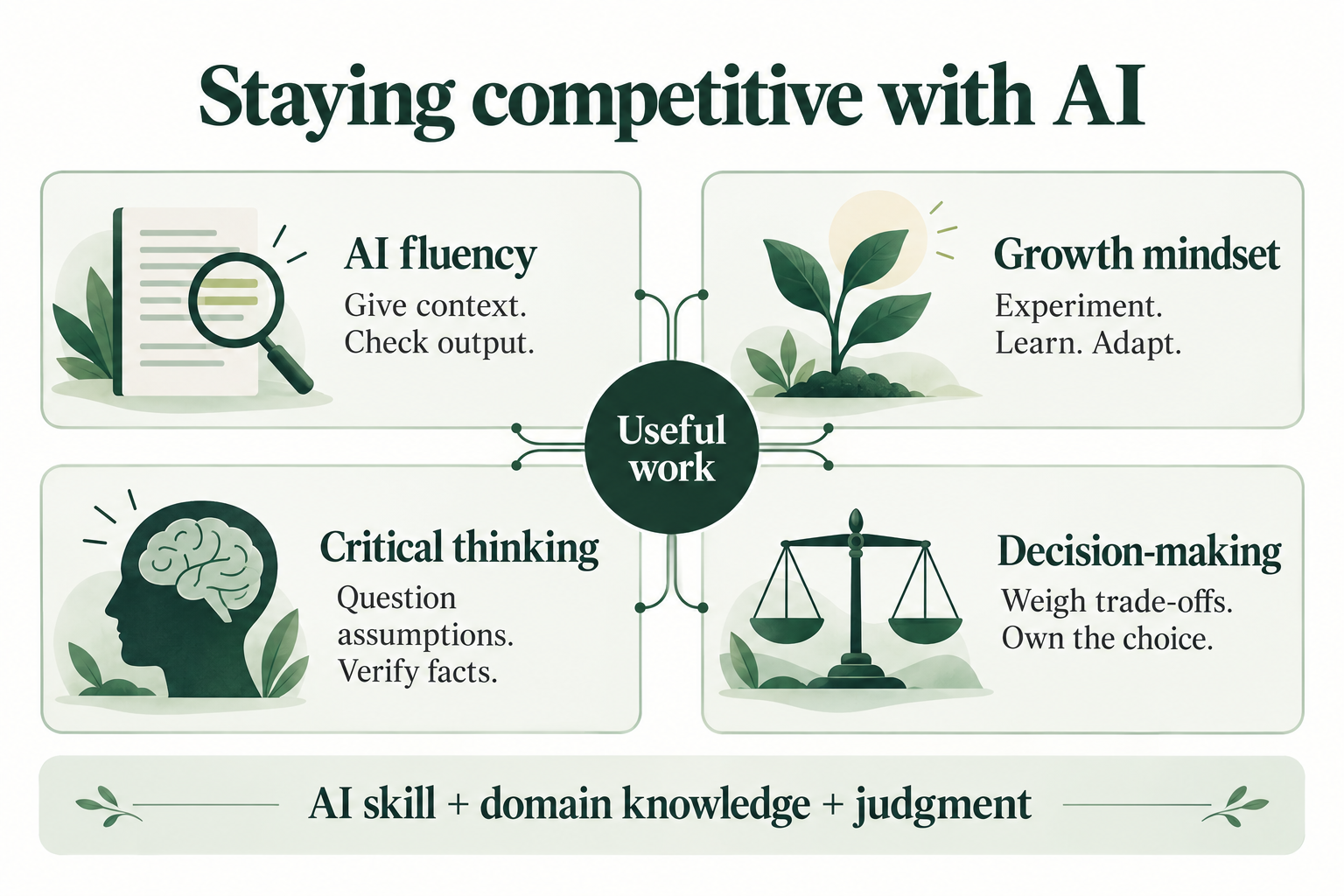
As AI makes drafting, research, and analysis easier to start, the standard for useful work should rise. My view is that staying competitive requires four connected habits: AI fluency, a growth mindset, critical thinking, and sound decision-making.
Build fluency through real tasks
Learn how to give context, describe a useful result, and check the output. Start with a familiar task so you can recognize a weak answer. Compare the effort saved with the effort spent correcting it. Knowing when to do the work yourself is part of fluency.
Keep learning without chasing every launch
A growth mindset means being willing to test a better approach and change your view when the evidence changes. Choose one workflow, experiment with a small improvement, and record what worked. A repeatable learning habit is more useful than an ever-growing list of tools.
Challenge convincing answers
AI can produce a confident explanation from incomplete context. Ask which facts are supported, which assumptions are doing the work, and what evidence would lead to a different conclusion. Separate a plausible suggestion from a verified fact.
Make the decision and own the trade-off
Use AI to expand options and examine consequences. Then decide using the goal, constraints, and people affected. The ability to explain a decision remains valuable even when a tool can produce its first draft.
A hypothetical comparison: a product-decision brief
Imagine deciding whether to simplify onboarding or build a new dashboard. Prepare a short brief manually from an approved pack of usage findings, support notes, and delivery constraints. Then use AI with the same material. Both versions must explain the recommendation, alternatives, evidence, and unresolved questions.
- Correction time: count reading, checking, and rewriting as well as drafting. A quick first version may create more work later.
- Accuracy: trace factual claims to the pack. Remove unsupported claims even when they make the recommendation sound stronger.
- Context: check whether each brief respects the integration dependency, the users affected, and the business goal.
- Usefulness: can a colleague understand the trade-off and identify the next decision without asking for a new explanation?
If the AI-assisted brief invents a customer trend or misses the dependency, its fluency is not a reason to accept it. Correct it, narrow the task, or write that part yourself. Keep AI where it helps you produce a better decision, with acceptable checking effort.
I see the strongest combination as practical AI skill plus domain knowledge and judgment. A useful learning habit is to notice where your own reasoning improved, and where you relied too quickly on a convincing answer.